

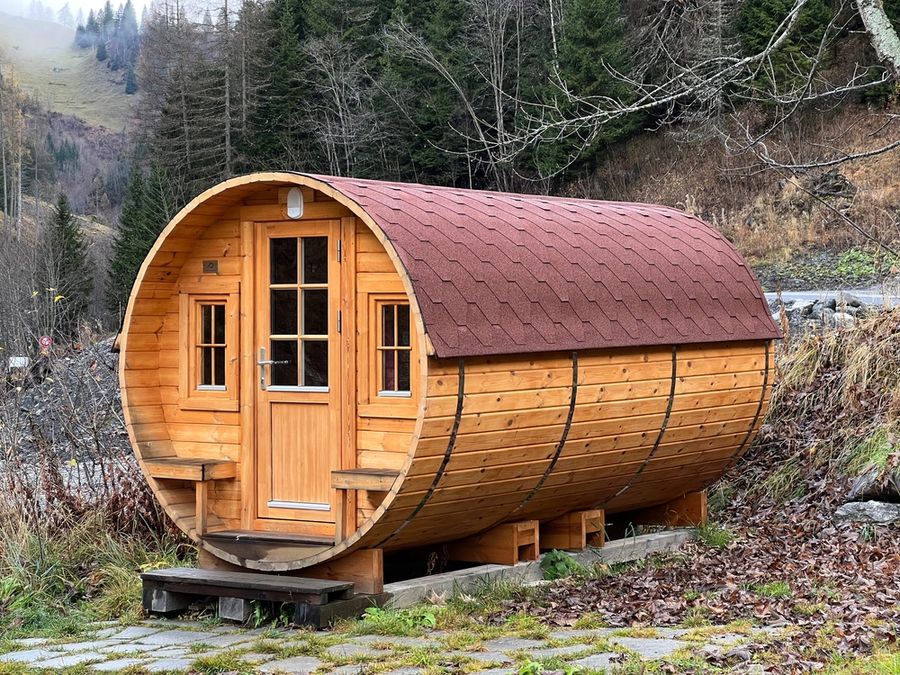
An outdoor sauna can turn part of a backyard into a year-round retreat, but choosing the right structure matters before selecting heaters, windows, or accessories. Barrel models prioritize compact heating space and a distinctive footprint, while cabins provide straighter walls, greater vertical room, and more flexible seating. By comparing heat distribution, usable space, weather protection, and installation, you can realize which design better suits your particular property.
Barrel Saunas Make Efficient Use of Heated Space
The rounded interior is the defining feature of a barrel sauna. Because there are no upper corners, there is less interior volume to heat than in a similarly sized rectangular structure. Manufacturers point to this reduced volume as one reason barrel designs can warm quickly, while the curved walls can help redirect rising heat down the sides rather than allowing as much of it to collect in ceiling corners.
That efficiency can make a barrel appealing for a smaller backyard sauna intended primarily for one or two couples. The tradeoff is geometry. Curved walls reduce vertical space toward the sides, affecting where benches can be positioned and how freely taller bathers can stand. Anyone who values maximum floor-to-ceiling room should compare interior dimensions rather than relying only on the advertised number of occupants.
Cabin Saunas Provide More Flexible Seating
A cabin uses a familiar rectangular structure, allowing the benches to extend along straight walls. This makes multi-level seating much easier to incorporate. Current outdoor cabin models commonly use upper and lower benches, allowing bathers to choose between the hotter air higher in the room and a milder experience closer to the floor.
The extra vertical room can also make a cabin feel more spacious, particularly when several people are using it at once. Some designs add changing areas, porches, larger windows, or benches wide enough for reclining. The disadvantage is that this additional interior volume must also be heated. A larger cabin may therefore require a more powerful heater than a compact barrel, making correct heater sizing especially important.
Outdoor Weather Protection Deserves Attention
The name “barrel” may suggest that the rounded boards form a completely weatherproof shell, but homeowners should not assume that. One outdoor-sauna manufacturer specifically notes that the interlocking staves on its barrel models do not create a watertight roof and recommends installing the supplied shingles or another appropriate roof covering. Wind-driven rain can also enter through portions of the structure.
Cabin saunas take a more conventional approach, typically incorporating a pitched or sloped roof designed to shed rain and snow. That can make weather protection more familiar to homeowners accustomed to sheds and other backyard structures. Whichever style is chosen, exterior wood still needs appropriate maintenance, and drainage around the sauna is important for keeping the structure away from persistent ground moisture.
Both Designs Need a Stable Outdoor Base
Neither a barrel nor a cabin should simply be dropped onto uneven soil. Outdoor saunas require a stable, level foundation, and acceptable bases can include concrete, prepared gravel, or a structurally suitable deck. The exact foundation requirements depend on the model, local soil conditions, structure weight, and manufacturer instructions.
Barrels can work particularly well where the goal is to fit a sauna into a relatively compact portion of the yard. Cabins generally occupy a more conventional rectangular footprint, which can make them easier to align beside a fence, patio, garage, or other straight boundary. Before ordering either style, homeowners should also plan pathways, door clearance, drainage, electrical access, and any setback requirements that apply locally.
Heater Choice Matters as Much as Shape
Both barrel and cabin saunas can be built around traditional electric heaters, and many outdoor models also accommodate wood-burning heaters. Electric models typically require a dedicated circuit and professional wiring, so proximity to the home's electrical service can affect placement and installation complexity. Wood-burning models introduce other considerations, including chimney clearances, fuel storage, and local fire or building requirements.
The shape of the room should ultimately complement how the sauna will be used. A barrel can suit people who want a compact space that reaches temperature efficiently and provides straightforward bench seating. A cabin is often better suited to bathers who prioritize multi-level benches, extra headroom, larger groups, or more elaborate layouts.
Let the Way You Sauna Decide
Neither outdoor design is automatically superior. Barrel saunas offer an efficient heated volume, distinctive appearance, and relatively compact layout, making them attractive when space and warmup performance matter most. Cabin saunas trade some of that compactness for straighter walls, tiered seating, and greater flexibility in interior design.
The better choice comes down to the backyard and the experience you want inside it. Measure the available area, decide how many people will regularly use the sauna, consider whether upper-level seating matters, and examine how the structure handles your local weather. Those practical questions are more useful than choosing between barrel and cabin designs based on appearance alone.