

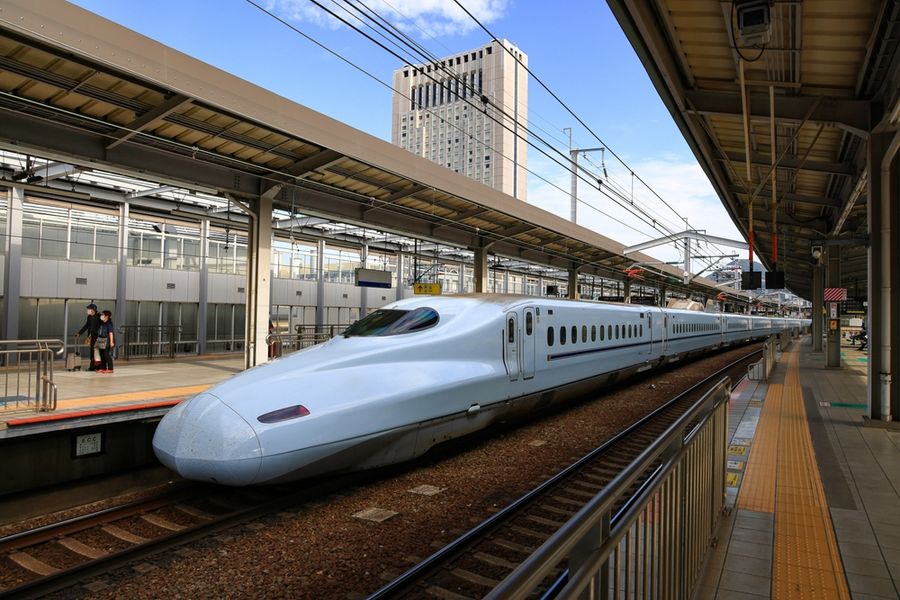
Few transportation experiences combine convenience and sightseeing as neatly as Japan’s Shinkansen. For American travelers visiting Tokyo, Kyoto, and Osaka, the Tokaido Shinkansen connects all three without airport transfers, long highway journeys, or complicated connections. The route makes it possible to leave central Tokyo in the morning and reach Kyoto or Osaka with much of the day still available. Understanding the train types, booking process, station layout, and baggage rules makes the experience even smoother.
Know the Three Tokaido Shinkansen Services
The Tokaido Shinkansen runs between Tokyo and Shin-Osaka, stopping at Kyoto along the way. Three service types operate on the line: Nozomi, Hikari, and Kodama. Nozomi makes the fewest stops and is the fastest choice, while Hikari stops more frequently and Kodama serves every station. The fastest trains cover Tokyo to Shin-Osaka in about 2 hours and 21 minutes, while Tokyo to Kyoto can take roughly two hours.
For most visitors traveling only among Tokyo, Kyoto, and Osaka, Nozomi offers the simplest combination of speed and frequency. Hikari can also work well when its departure time better fits the itinerary. Kodama makes more sense when traveling to smaller stations along the route rather than simply moving between the three major tourist cities.
Make Tokyo to Kyoto Part of the Experience
Tokyo Station is enormous, so arriving with time to locate the Tokaido Shinkansen gates can make the first journey less hurried. Once aboard, the urban landscape gradually gives way to smaller cities, mountains, and countryside. Travelers can eat and drink on the train, making a station bento, or ekiben, a popular companion for the trip.
A reserved window seat can make this leg especially enjoyable because the journey itself becomes part of the sightseeing. Mount Fuji may be visible when weather conditions cooperate, although clouds can easily hide it. Keeping a camera accessible rather than buried in a suitcase makes spontaneous views easier to enjoy without disrupting other passengers.
Remember That Osaka Means Shin-Osaka
Kyoto and Osaka are close enough that the Shinkansen can make an easy two-city itinerary. The important detail is that bullet trains use Shin-Osaka Station, not Osaka Station. Travelers staying around Umeda, Namba, Dotonbori, or other parts of central Osaka will normally continue from Shin-Osaka using local rail or subway connections.
That distinction matters when choosing a hotel or estimating travel time. A property advertised as being near Osaka Station is not immediately outside the Shinkansen terminal. Still, the short Kyoto–Shin-Osaka segment makes it practical to spend several nights in each city rather than treating the transfer as a major travel day.
Reserve Seats Before Busy Travel Days
Tickets can be purchased at stations, but advance booking is useful when travelers want a particular departure or seat. The official Smart EX service allows passengers to search trains, choose departure and arrival stations, select seats, and purchase Tokaido Shinkansen travel online. It is available to users in the United States and can provide QR-ticket boarding without requiring a stop at a station counter.
Reservations become particularly valuable around major Japanese travel periods, when trains can become crowded and special seating rules may apply. Families or groups who want to sit together should also avoid assuming several adjacent seats will remain available immediately before departure.
Pay Attention to Oversized Luggage
Ordinary carry-on luggage is straightforward on the Shinkansen. Smaller bags can generally fit in overhead racks or around the passenger’s seating area. Large international suitcases require more planning, however, because the Tokaido Shinkansen has specific rules for oversized baggage.
Bags whose combined length, width, and height measure more than 160 centimeters and up to 250 centimeters require a reservation for designated oversized-baggage space. Smaller luggage does not require that reservation, although travelers still need to store it safely. Measuring a large suitcase before leaving the United States can prevent an unpleasant surprise at the station.
Keep the Transfer Days Simple
One advantage of traveling these cities by Shinkansen is that there is little reason to overcomplicate a transfer day. A traveler can check out of a Tokyo hotel, ride directly to Kyoto, leave luggage at the hotel, and begin exploring the city that afternoon. The same strategy works when continuing from Kyoto to Osaka.
Pack frequently needed items where they are easy to reach, keep tickets or boarding information accessible, and confirm the correct departure platform before settling into the station. Japan’s major railway stations can feel overwhelming at first, but English signage is widespread along this heavily traveled route.
Three Cities Connected by One Remarkably Easy Route
Tokyo, Kyoto, and Osaka offer dramatically different experiences, yet the Shinkansen makes combining them unusually straightforward. Tokyo delivers immense neighborhoods and modern city energy, Kyoto brings temples, gardens, and historic districts, while Osaka offers its own distinctive food and entertainment culture.
The Tokaido Shinkansen turns those destinations into a natural sequence rather than three separate transportation challenges. Book the right service, understand where the Osaka train actually arrives, plan for large luggage, and the rail journey becomes one of the easiest parts of the trip.