

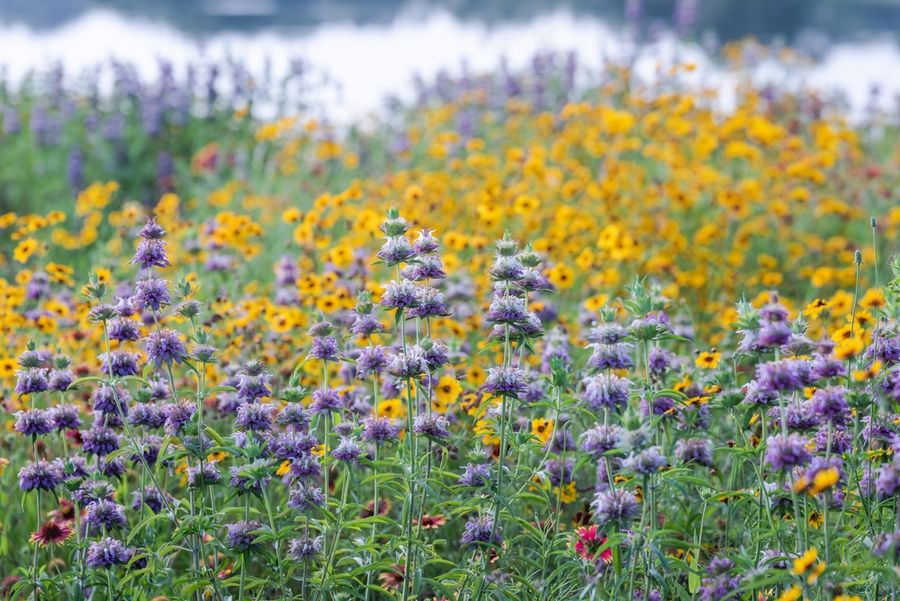
Grass can struggle in precisely the places where mowing is most frustrating: beneath mature trees, across steep banks, beside hot driveways, or in patches that remain unusually wet or dry. Native ground covers offer another way to keep soil covered without forcing turf into conditions it dislikes. By matching low-growing plants to the light, moisture, and soil already present, homeowners can transform problem areas into intentional parts of the landscape while reducing the amount of lawn that needs regular attention.
Start With the Problem Grass Cannot Solve
Before choosing plants, identify why turf performs poorly in the area. Deep shade beneath trees may prevent grass from receiving enough light, while a sunny slope can dry quickly and make mowing awkward. Other sites stay wet after storms, have shallow or rocky soil, or receive reflected heat from pavement.
Ground covers are particularly useful on steep slopes, narrow strips, and other areas where conventional lawn maintenance is difficult. Once established, many require little or no mowing, although new plantings still need weeding and care while they fill in. Treating the existing site conditions as a guide is usually more productive than repeatedly reseeding struggling turf.
Match Native Plants to Your Region
“Native” is not a single national category. A plant naturally occurring in Pennsylvania may not be native to Arizona, Oregon, or southern Florida. Native plant communities reflect regional soils, rainfall, temperatures, and other environmental conditions, so homeowners should select species appropriate to their own part of the country.
A ZIP-code-based native plant finder can narrow the search to species historically found in the surrounding area. Local Cooperative Extension offices, native plant societies, and nurseries specializing in regional plants can provide another layer of guidance. This regional approach also prevents a common landscaping mistake: choosing an attractive ground cover that thrives elsewhere but struggles in the conditions found at home.
Replace Shady Grass With Woodland Ground Covers
Shade beneath mature trees is one of the most obvious places to reconsider turf. Several eastern U.S. natives illustrate the possibilities. Pennsylvania sedge (Carex pensylvanica) has a low, grass-like appearance and can tolerate shady, relatively dry locations. Wild ginger (Asarum canadense) is another shade-tolerant ground cover, while foamflower (Tiarella cordifolia) can suit shaded areas with more moisture.
These plants do not create a surface identical to a conventional lawn, which is part of the point. Sedges can provide a soft grassy texture, while flowering and foliage plants create a more layered woodland appearance. Homeowners can use one species in broad drifts or combine several compatible natives rather than expecting a single plant to cover every condition beneath a tree canopy.
Turn Sunny Slopes Into Planted Ground
A steep bank presents two lawn problems at once: grass may dry quickly, and operating a mower on the slope can be inconvenient or unsafe. Ground-covering vegetation can keep soil covered while reducing the need to repeatedly travel across the incline. Native ground covers can also contribute to erosion control as their foliage and roots establish across exposed soil.
Plant choices should reflect both sun exposure and moisture. Moss phlox (Phlox subulata), for example, is an evergreen ground cover suited to sunny, well-drained sites in portions of the eastern United States. Pennsylvania recommendations for difficult sunny slopes also include species such as dwarf tickseed and native prickly pear in appropriate conditions. The exact species should still be checked against its native range before planting.
Give Wet Areas Plants That Can Handle the Moisture
Repeatedly soggy soil can thin turf and leave muddy patches, but some native plants naturally occupy wetter environments. In areas where the moisture is not caused by a drainage failure threatening the house, replacing unhappy grass with moisture-tolerant vegetation can make the site look deliberate rather than neglected.
For example, golden ragwort (Packera aurea) and sensitive fern (Onoclea sensibilis) are options for moist, partly shaded ground within their native ranges. Sunnier wet areas can support an entirely different group of plants, including species such as blue mistflower and blueflag iris in suitable regions. A persistent drainage problem near a foundation, however, should be corrected rather than disguised with plants.
Plan for Establishment Before Removing All the Grass
Ground covers are low-maintenance only after they become established. New plants need enough water to develop roots, and bare spaces between them can invite weeds. Mulching around young plants and removing competing weeds gives the planting time to knit together. Dense ground-cover plantings can eventually suppress weeds, retain soil moisture, and reduce erosion.
Homeowners do not need to replace an entire lawn at once. Starting with one troublesome slope, shaded corner, or narrow side yard makes it easier to see how a chosen plant performs through different seasons. Expansion can follow once the first area is established.
Let Difficult Ground Become a Different Kind of Garden
A stubborn patch of lawn does not always need more seed, fertilizer, or mowing effort. It may be better suited to plants built for the conditions already there. Native sedges can soften shady ground, flowering ground covers can spread across sunny banks, and moisture-loving species can occupy places where turf repeatedly fails.
Replacing grass selectively turns the hardest parts of the yard into opportunities for a more varied landscape while reducing the amount of ground that has to behave like a traditional lawn.