

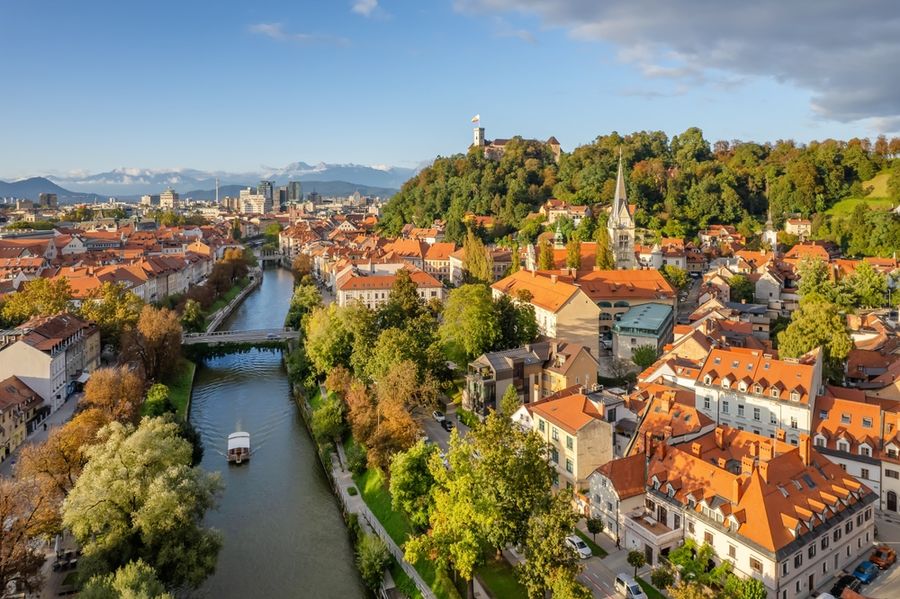
Paris, Rome, and London dominate many first-time Europe itineraries, but a smaller capital can offer a completely different kind of trip. Ljubljana, Slovenia’s compact capital, combines historic architecture, riverside cafés, markets, green spaces, and easy access to the rest of the country without demanding days of complicated transit. Travelers can cross much of the center on foot, linger over meals, and still have time for museums, castles, and nearby nature.
A Capital That Is Easy to Explore on Foot
Ljubljana’s scale is one of its biggest advantages. The historic center clusters around the Ljubljanica River, with major sights such as Prešeren Square, the Triple Bridge, Central Market, Dragon Bridge, and Ljubljana Castle all within a relatively compact area. Much of the center is pedestrianized, and the city promotes one of Europe’s largest pedestrian zones alongside extensive cycling infrastructure.
That changes the rhythm of a city break. Instead of repeatedly descending into subway stations or planning the day around cross-city transportation, visitors can simply walk from one neighborhood or landmark to the next. A coffee stop, riverside lunch, or unexpected shop does not feel like a detour because the next attraction is rarely far away.
The Architecture Gives the City Its Own Identity
Ljubljana does not feel like a smaller imitation of another European capital. Much of its distinctive appearance comes from architect Jože Plečnik, whose work reshaped bridges, riverfront spaces, markets, libraries, and public areas across the city. His influence can be seen around the Triple Bridge, Central Market, and along the Ljubljanica embankments.
The Old Town adds Baroque buildings, Art Nouveau façades, medieval streets, and the castle overlooking the center. A walk through the historic core can take in Town Square, Robba Fountain, Prešeren Square, the Franciscan Church of the Annunciation, Central Market, and Dragon Bridge before heading uphill or taking the funicular to Ljubljana Castle. That concentration of sights makes architectural wandering rewarding even on a short stay.
The River Creates a More Relaxed City Break
The Ljubljanica runs directly through the center rather than sitting on its edge, giving the city a natural gathering place. Pedestrian embankments lined with cafés and restaurants encourage visitors to slow down instead of treating every hour as another sightseeing slot. Bridges connect the two sides frequently, so crossing the river becomes part of exploring rather than a transportation challenge.
The result can feel markedly calmer than navigating the central districts of Europe’s largest capitals. Travelers can spend a morning seeing major landmarks, devote the afternoon to a museum or park, and still have plenty of time for a leisurely dinner. Ljubljana rewards unstructured time rather than making it feel wasted.
Food Offers a Window Into the Rest of Slovenia
Ljubljana’s Central Market is an especially useful introduction to Slovenian food. Its outdoor stalls, covered market, small food shops, and riverside spaces bring together produce, cured meats, cheeses, breads, pastries, oils, and other products from around the country. The market also functions as a social gathering place rather than solely a tourist attraction.
Restaurants extend that opportunity beyond traditional dishes. Ljubljana’s location between Alpine, Mediterranean, Balkan, and Central European influences creates considerable culinary variety. Slovenian wines, local cheeses, seasonal vegetables, freshwater fish, dumplings, pastries, and regional specialties can all appear within a relatively small dining scene. Travelers interested in food can explore widely without crossing an enormous metropolitan area.
Nature Is Never Far Away
Ljubljana offers parks and wooded spaces within the city, but its position in Slovenia makes it even more appealing to travelers who want to combine an urban stay with outdoor scenery. The country’s modest size allows Ljubljana to function as a base rather than an isolated destination.
Lake Bled is one of the most obvious excursions, offering its famous island, castle, traditional pletna boats, and Alpine surroundings. Postojna Cave, Predjama Castle, the medieval town of Škofja Loka, and other destinations are also promoted as day trips from Ljubljana. A traveler can therefore spend one day among bridges and cafés and the next beside an Alpine lake or underground in a vast cave system.
Smaller Does Not Mean Less Interesting
Choosing Ljubljana over a larger European capital is not about settling for fewer things to do. It is about experiencing a city at a different pace. The landmarks are close together, the riverfront encourages lingering, distinctive architecture gives the center personality, and day trips can introduce dramatically different landscapes without relocating every night.
For travelers who have already experienced Europe’s biggest cities, Ljubljana can feel refreshingly manageable. It delivers castles, churches, markets, museums, food, architecture, and nightlife in a setting where simply walking out the hotel door is often enough to begin the day. That combination makes Ljubljana more than an alternative to the famous capitals. It makes a strong case for being the destination itself.