

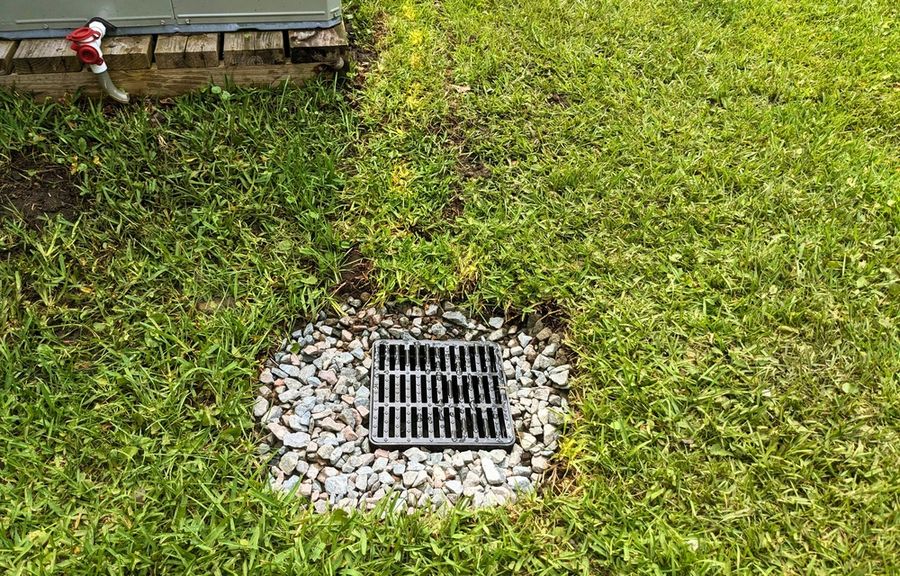
A patch of lawn that stays soggy long after the rest of the yard dries can signal a drainage problem beneath the surface. When water repeatedly collects in the same area, a French drain can create an underground path that carries it toward a safer outlet. By combining a gravel-filled trench with perforated pipe, the system helps redirect excess moisture before it turns part of the yard into a persistent muddy zone.
Decide Whether a French Drain Fits the Problem
A French drain consists of a gravel-filled trench containing perforated or slotted pipe. Water enters through the gravel and pipe openings and then moves downhill toward an outlet. Unlike a single catch basin, the system can collect moisture along the length of the trench, making it particularly useful where soil remains saturated across an area rather than at one isolated puddle.
Before digging, determine why the yard remains wet. Roof runoff from a badly positioned downspout may require a much simpler correction, while a depression in the lawn might be better addressed by regrading. Redirecting downspouts toward an appropriate lawn, garden, or other infiltration area can reduce concentrated runoff without requiring a buried drainage system.
Choose Where the Water Will Go
A French drain does not make water disappear. It moves water from one location to another, so the discharge point is one of the most important parts of the design. The pipe generally needs to lead toward a lower location where the collected water can safely infiltrate or otherwise be managed. Gravity provides the force that carries water through the sloping pipe.
Avoid simply directing the outlet toward a neighboring property, sidewalk, foundation, or another low spot. Local rules may govern where stormwater can be discharged, particularly if a drain connects to a municipal system. Homeowners should check local requirements before deciding on an outlet and consider alternatives such as a suitable infiltration area, dry well, or another approved drainage feature.
Build the Drain Around Perforated Pipe and Gravel
A traditional installation starts with a trench running through or alongside the saturated area toward the selected outlet. Landscape fabric lines the trench, followed by gravel and a perforated pipe. Additional gravel surrounds the pipe, while the fabric helps keep surrounding soil from migrating into the stone and interfering with drainage.
The trench needs a consistent downward grade rather than a series of dips. If a section slopes backward, water can remain trapped instead of moving toward the outlet. The required dimensions will vary with the drainage problem and the specific product being installed, so following the pipe or drainage-system manufacturer's instructions is more reliable than using one universal trench depth.
Plan the Route Before Digging
French drains involve enough excavation to make underground utilities a serious consideration. Homeowners should contact 811 before starting any digging project so affected utility operators can identify underground facilities in the proposed work area. Sprinkler lines, landscape lighting, private drainage pipes, and other homeowner-installed systems may also need to be located separately.
Planning can also reduce unnecessary trenching. Mark the wet area, determine the direction of natural fall, and establish the proposed discharge point before removing soil. A long drain that crosses patios, tree roots, utility corridors, or other obstacles may be more complicated than a shorter route positioned to intercept water before it reaches the soggy area.
Keep Sediment From Shortening the Drain's Life
The gravel and filter fabric are not merely filler around the pipe. They help water reach the perforations while limiting the amount of soil that enters the drainage system. Fine sediment can accumulate over time and restrict flow, which is why proper filtration around a subsurface drain matters.
Once installed, periodically check the outlet after heavy rain. Water emerging where expected indicates that the system is moving at least some moisture successfully. An outlet blocked by leaves, soil, roots, or landscaping can undermine an otherwise functional drain. Changes in the yard over time may also redirect runoff and create new wet areas that the original drain was never designed to handle.
Know When a Different Drainage Solution Makes More Sense
Not every wet lawn needs a French drain. Water pouring directly from a downspout may be handled by extending or redirecting that downspout, while runoff from pavement may require surface grading, a channel drain, or a catch basin. Sites where water naturally has nowhere lower to travel may require an infiltration feature or professionally designed drainage solution rather than a simple gravity-fed trench.
Large-scale drainage problems near foundations, retaining walls, septic systems, slopes, or neighboring properties also deserve more careful assessment. The goal should be to understand the movement of water across the property before choosing the hardware intended to control it.
Give Water a Better Route Through the Yard
A French drain can be an effective solution when a section of the yard stays saturated because subsurface water has no convenient route away. Its success depends less on the name of the system than on good drainage fundamentals: identify the source, provide a continuous slope, filter sediment, and send the collected water somewhere appropriate.
When those pieces align, a relatively simple buried trench can turn a persistently soggy patch into a much more usable part of the yard.